At the Marathon Des Sables 2024
Although I am a Podiatrist in Whitby, North Yorkshire, UK, I also like to volunteer my time and skills to help others achieve their goals. This blog is a glimpse into my recent adventure into the world of Sahara Desert ultra-running.
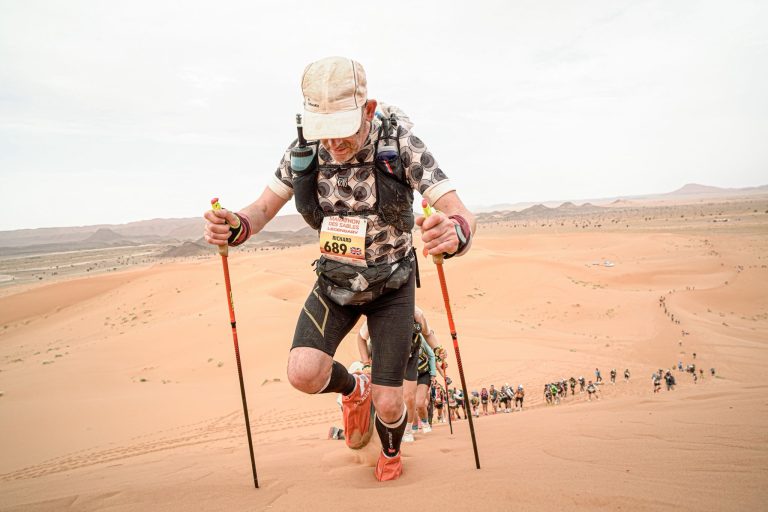
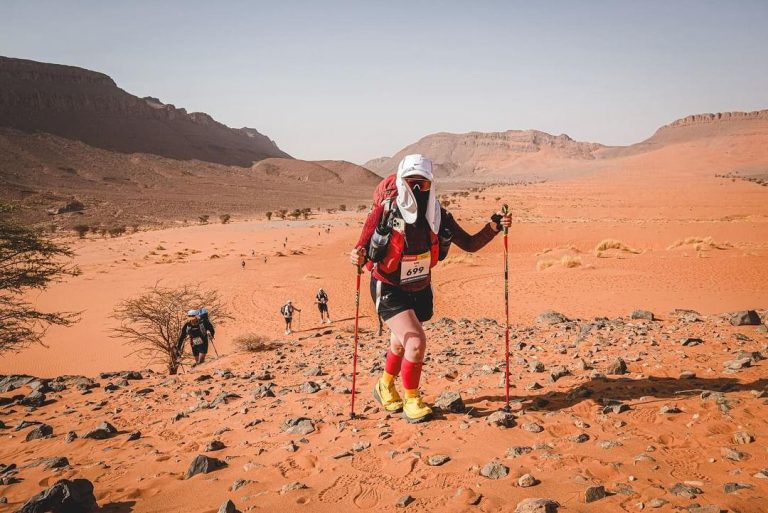
The Marathon des Sables (MDS) ultra run is known as one of the most challenging foot races in the world. The distance covered is 252 km over 6 running days, with one rest day splitting the 6 days.

In the 38th edition, there were 865 participants of 57 different nationalities, split between 27% female and 73% male. There were 351 staff members, with the medical team (orange jackets) being 60, comprising of doctors, nurses, podiatrists, and Moroccan paramedics. 53 blue jacket volunteers had many supportive logistic roles, and we couldn’t have done our job without these guys; they were so hardworking.

As an experienced Muscular Skeletal (MSK) podiatrist interested in blister prevention and treatment, I applied to the MDS as a medical volunteer. I have volunteered often at the London Marathon and the Great North Run. Still, I was interested to see how extreme ultra-running caused problems in the lower limb. Not only by fixing the runner’s issues in the race but also by learning more about the circumstances and problems they were struggling with and being able to write about preventing these problems for the participants in future events.

I was a competitive swimmer in my youth and, later, a swim coach for 20 years, so I understand the thought process of competition. I wasn’t worried about my podiatry skills, as I have been doing that for years. However, surprises will likely happen at events like these when the body is pushed to its limit.
I was still determining what the MDS was looking for in a medic as not a lot of people know how extensive a podiatrist’s skill set is.
I don’t speak other languages apart from English (I know, it’s embarrassing). Still, this year, the MDS decided to recruit English medics for the first time, could my luck be in?
My resume had collected dust, due to being self employed, this is where children come in very handy. My eldest son created an excellent CV for me, I almost didn’t recognise myself. Had I really become this skilled after all these years without realising it?
Six weeks later, I received a phone call from France advising me that I had been selected for the MDS legendary in April 2024 in the Sahara. I was so shocked that I was a little lost for words.
A quick phone call later to my boys regarding their commitment to doggy day/ night care, I accepted with cautious excitement and trepidation at the same time. What if I was too old and would hold everybody up, or be too slow in clinic? I was already nursing a hamstring injury (I tripped over the dog’s bed), getting up and down off the floor was a struggle and these were all my concerns.

I was just worried about the unknown. I knew I could do well at my job, but I’m not a fan of sand, have never camped, and could be better with natural wildlife. There are better scenarios for going into the Sahara Desert with.
I also have the added complication of getting lost, consequently, I always require direction, preferably by GPS.
Thankfully, I received the contact details of my fellow UK medics and created a WhatsApp group ( The Sahara Eight) three weeks before our leave date. We shared our experiences and concerns and problem-solved the challenges we were anticipating. Knowing I was going into this experience with these guys, I cannot express how lucky I felt.
I “fessed up” to being okay at my job but having zero navigation skills. I wondered if I would be a liability; I thought it was best, to be honest. I also reassured my children that I would do my absolute hardest not to cause an international incident!
However, I was reassured by the other UK medics, all eight of us made a strong team of four Doctors, one Nurse and three Podiatrists. I knew we would do well and felt comfortable and thankful I had been selected with them.
I had only one objective and was very clear on it; I wanted to make sure I could get as many of the participants over the finish line, either in my role as a Podiatrist or as a cheerleader (I wished I had brought some pom-poms)
After completing and passing the MDS medical courses, my bag was packed, and the start of our journey was upon us.

I set off to catch the train from York, and my navigation dyslexia had already kicked in………I was sat on the train to Liverpool instead of London; I quickly disembarked and eventually landed in London; I realised my bag was too heavy as I had packed the kitchen sink!!
I thought I would die on the Underground from Kings Cross to Gatwick Airport as my bag felt as heavy as a human on my back. * Note to self—* What could I get rid of out of my bag before the flight?
It was lovely meeting and spending dinner with the English medics the night before we flew. The chartered flight to Morrocco was at 7 am, we donned our orange vests at 4 am, and our job started there and then. All who travelled on the flight were MDS participants or volunteers; it now felt very real.

We arrived at Ouarzazate (pronounced Wuh-zuh-zet) in Morocco slightly later than planned, and the MDS flight from Paris landed early. Consequently, all the allocated coach numbers that were pre-arranged for us went out the window. As expected, I ended up on the last bus, which happened to be a French one, this was my first challenge (not speaking French). We were given a packed lunch and the race roadbook, which was totally wasted on me, as map reading for a direction dyslexic is a pointless exercise!

A six-hour drive into the desert later, I was the last to turn up in the camp. Thankfully, my colleagues had secured me a tent space in one of the two UK tents we’d occupied. The tents were open at the front and slept 4 people, and there were foam mattresses to lie on.

My first task was to use the toilet, and Doc Jason showed me where they were and what to expect. They are divided into fabric cubicles with concertinaed toilet seats on the bathboard. The biodegradable human waste bags were tied and placed in the outside bin. This sounds okay, doesn’t it, but I managed to find the only faulty toilet seat, which collapsed while I was sitting on it, cutting the waste bag in half, I felt I had arrived!

After that incident, I was cautious about sitting on them, as you never knew where that faulty seat would be, especially when the camp moved three times, during the week.
Early on, I recognized that I had to get over myself, being in the desert is different from home; therefore, there was no exit option. I knew I just had to get on with it, and the competitors had it much more challenging than us, so I had no complaints!
Sadly, my blow-up mattress had a slow puncture. It was completely deflated by the morning and sounded like an empty, crisp packet when I turned over. However, it was so uncomfortable without it. I used to get up at night and pump it back up again, which I’m sure annoyed my fellow tent mates, as it sounded like a dog panting at the tent’s entrance.
Waking up to being covered in sand was going to be the norm; it just gets everywhere; that gritty crunch in my mouth from the moment I woke up never went away. However, on the plus side, it works as a great facial; from the daily sandblasting, my skin had never felt so smooth. The sandstorms that were ever present were like a windy day on the beach at home; I just put my back towards the wind/sand, I never used the ski goggles or buffs to shield my face, but others did; I think that comes with many years of dog walking on the beach!

The first morning was spent checking in the competitors, ensuring they had everything they needed and getting rid of those they didn’t require. Stock cubes were a new addition and a change from the traditional salt tablets. They were supposed to be kinder on the stomach, slowing the sodium release into the body overnight. I think there was a split jury on that one—some liked it, and others preferred the salt tablets!
The rest of the day was spent packing medical bags for the checkpoints and learning protocols for the possibility of competitor ill-health during the event.
I didn’t have a name badge, but Serge did, as he didn’t arrive in the desert, so his badge was spare. I identified as Serge for the day until Jake made me a Lindsey badge; I quite liked having two identities to switch between until I started getting a lot of French patients who were confused at why I couldn’t converse with them in their language …… no more hiding, it was time to be Lindsey full time!

Briefings in the medical tent, both mornings and evenings, would be a daily occurrence. As a medic, being familiar with different techniques, medicaments, and dressings that the MDS uses takes time to adjust; adaptation is the word that will be the most frequently used in my thoughts for the week ahead.
We met Doc Georgie from Australia. She had an English and a French parent, so we adopted her, and the Sahara Eight became the Sahara Nine!

I braved the showers—well, that’s a slight exaggeration—the cubicles with a bucket of water and a cup. I am not complaining, as that was the best shower ever. Simple pleasures were never taken for granted in this heat. I would revisit the showers.
The race was split into six stages, with a day off on the 4th day after the 80 km stage; a rest day for the runners meant a hectic day and night in the medical tent. The camp would move thrice over the race, and everything would be moved on without leaving a trace in the desert. It was hard work for the logistics team. In the meantime, the race continued, and the checkpoints picked up the slack. At the same time, the main bivouac medical tent was relocated and set up again.

The race stages were set off early in the morning, ensuring cooler desert temperatures and slightly easier for the participants. It’s easier in the loosest sense of the word, as this ultra run was seriously hardcore.

The first run stage was busy for us in the bivouac medical tent in the late morning and afternoon; a few of our British team had gone to the checkpoints, and each checkpoint had drinking water replenishment and ice-cold water refreshment over the head and neck area, rest tents, toilet, and a medical tent. This brief interruption to the race gave the medics a chance to see if the runners were okay and able to respond to our questions, thus giving us the ideal opportunity to work out if they were mentally and physically functioning.

The participants had GPS beacons, which they could press themselves or have someone else press for immediate medical assistance if they were in trouble.
On the second day, it was my turn to go to checkpoint two, and we had a great day of fixing feet and refreshing water. There was great positivity at these checkpoints, keeping the runners’ morale high as they passed through. The blue jackets had brought music, and you could have easily mistaken it for a daytime disco!

Unfortunately, our vehicle got stuck in the sand on the way back to the main bivouac. This is easily done in the desert, as the sand shifts constantly with the wind—it’s a bit like driving in the snow! Thankfully, all the vehicles travel in pairs, so there is always someone to help out. We spent the rest of the day/evening in the bivouac’s medical clinic.

On day three, I was at checkpoint 2 again, but on a different route. Travelling to these checkpoints could often take an hour or two. They were very early starts, but we certainly got to see the most amazing sunrises en route.
This one was extra special as I saw a caravan of wild camels running on the horizon. I never thought I would see such a thing in my lifetime, and it was an amazing sight. They are super-fast, and I can see why they have camel races now.

This day was a different experience at this checkpoint as it was the longest stage, 80km, and we were starting to see quite poorly runners. The helicopter had already taken one runner to hospital, and quite a few were struggling with high body temperatures. The day was long and eventful, and we returned to camp with a couple of runners that needed escorting back. We were so busy that I forgot to look after myself, and after not eating or drinking for 8 hours, I realized how easy it was to become dehydrated; needless to say, it took me 18 hours before I needed the loo, a big mistake on my behalf and one that I didn’t make again.

As the days went on, the checkpoint medical tents got busier due to the increase in the number of struggling participants. I must admit, I loved the water refreshing job at the checkpoints. It was a great opportunity to feel part of the race and not just pick up the feet pieces at the end of the day. Also, I got to know the runners who didn’t visit us in the medical tent, and it was nice to see them in action.
It was at this point that I realised my age was an advantage, not just for the foot and leg care required but also for my ability to recognise what each individual participant may require from me, whether it was a bit of banter, medical chat, cheerleading, sense of humour, words of encouragement, or a well-needed hug for those on their knees.
This skill set couldn’t be bought or learned; it was acquired from life experiences alongside a hefty dose of empathy. This is not meant to dismiss the younger volunteers, who brought their exceptional skills. Their boundless energy and positivity were a priceless commodity. A good mixture of ages and experience is needed at these events to achieve a great outcome.

I woke up the next morning to find a scorpion under my sleeping bag, frozen to the spot and still in my sleeping bag. I couldn’t run, as my body dearly wanted to. I took a huge, sharp breath, which drew the attention of Doc Renee, my tent mate. She reassured me that at least it wasn’t a snake, which would have been a lot worse.
This surprising 5 a.m. conversation broke my frozen tension as I watched the scorpion scuttle off under my bag. After some thought, I accepted that I was in its territory, and it was probably seeking out a little warmth from my sleeping bag. It didn’t want a fight and neither did I!

The fear of something is much worse than the reality of that fearful situation. Although it was still on my mind after that, I reassured myself that nothing had happened. I was so tired when my head hit the inflatable pillow, and I was fast asleep, not thinking of anything.
The 80 km stage on day three was brutal; the temperature rose to 52°C and the runners really struggled; a lot were walking more now, which may sound easier, but the reality is they are outside for longer, during the hottest parts of the day, which inevitably claimed a few of them. A rising core body temperature, alongside depleted sodium levels with variable glucose levels, could easily take the participants out of the race, and that’s without the constant foot and backpack blisters and injuries they were suffering.

What the body can endure when pushed to its limits is nothing short of miraculous.
This main medical tent stayed open all night for the participants, and some of the medics and blue jackets stayed overnight at the checkpoints; thankfully, I wasn’t on the register after 10 pm.
The next morning, before the clinic started, I took the opportunity to walk in the runners’ camp, as I usually walk my dogs early in the morning before work. The desert looked quite majestic first thing in the morning. There still was a coolness from the night before, quite serene really without the ferocious intensity of the sun that would inevitably arrive later on.

The atmosphere in the runner’s camp was friendly and welcoming, and I could see they had formed close bonds already. Chatting with the participants outside the medical tent was lovely, and for those whose language wasn’t English, a simple thumbs up or an okay sign with a smile was understood and well received. This is when I realised by simply asking how someone was, it could lift their spirits instantly. When you are miles away from your home and loved ones and exhausted, this is what you need; sincerity cuts through most language barriers.
Later, I visited in the evening and found them participating in a yoga class—yes, that’s correct—in the middle of the desert from one of the ladies wearing a blue jacket. It was quite surreal to see and really well attended by the competitors.

After day three, I was located in the medical tent at the bivouac, and this is where I stayed from then on. It was hot (50 degrees Celsius +) and difficult to work in. The fans were a welcome relief in one way, but they were a real pain when you were trying to hang onto a dressing. At this point, I started to use patient participation; otherwise, I would never get through a treatment.
Day four was when I lost my cutlery set that the MDS supplied, which was a little annoying; I didn’t feel particularly hungry due to the heat, and it’s amazing how you can adapt to the food you eat. The soup was very good, and I could drink it from the bowl; chocolate spread and rotis were a hit for breakfast, and the evening stews with rice could be eaten with the bread that was crispy on the outside and used as a spoon…… problem solved, I still couldn’t exit the medical tent without going in the wrong direction though, thankfully it didn’t matter as it was just desert.

This was a rest day for the runners after the grueling 80km stage the day before, and the medical tent was a busy one; the queue was never-ending. Unfortunately, the tummy bug that was going around finally caught up with me, and I left to go to sleep; thankfully, that was all that was needed. I was back up the following morning and back into the clinic.
The next couple of days went in a blur of blister treatments and lower limb injuries; it was getting harder for the participants now, as their feet had blisters on blisters; a lot of the blisters were located under the balls of the feet and were very painful to walk on, let alone run. I felt like we were firefighting at this stage; trying to keep dressings on in the extreme heat with sweaty skin was a constant challenge. All I kept thinking about was how a lot of these blisters could have been prevented in the first place, which is why I kept a mental note of these issues to write about later so that future desert runners could avoid the exact outcome of blisters as this cohort of participants

Some people have an enormous amount of determination and grit by getting up each morning to face the same challenge repeatedly; this must have been a real struggle for the competitors. I sometimes had those thoughts facing the medical tent and i wasn’t even running. My respect for the participants was growing daily. For whatever reason, these guys were taking part; they were absolutely committed to finishing. There were no shirkers in this camp.
Downtime in the camp was rare and precious for all of us, and I was so glad I had spent the time talking to the blue jacket volunteers and the French medics. I was disadvantaged because I did not speak French, but many of the medics made the effort to hold a conversation with me, and I really appreciated it.
The credit really goes to my fellow English colleagues, as they were the ones who helped me rise when my energy levels dropped. They did make my sides hurt from laughing at conversations and situations we found ourselves in. I couldn’t have done this event as well as I did, without them, and I now find myself with new connections with people I would never have met before. Because we laughed a lot, the UK medic tents were known as the noisiest tents. We were asked to shush a lot, which made us worse, as trying to contain the giggles was almost impossible.
I tried to learn a few words in French, but I stopped immediately after talking to the younger French medics, who informed me that my pronunciation of “The neck” in French, could be interpreted as “I am hot” and not as in, the temperature. I then realised that many of the runners had smiled at me a lot at the checkpoints, and now I know why. A little of me did die of embarrassment, but I soon got over it as I went onto the next embarrassing moment and then the next, as there were so many of them!

It is now the last run stage, and guess what? It is my birthday!
My birthday isn’t my favourite day of the year, not because I’m aging, as I am very grateful to be here, but because I really miss my loved ones who are no longer here on this day.
The role assigned to me on this auspicious day was the finish line. I cannot tell you how amazing it was to see all those participants we had seen in the medical tent and at the checkpoints actually completing their challenge. The privilege was absolutely all mine, and I loved being part of their experience.

On the plus side, I gave and received so many hugs on my birthday that it ended up being the best birthday ever. I could never have predicted that scenario!
When the last runner arrived at the finishing line, it was time to return to the hotel in Ouarzazate, Morocco. All of my English colleagues had already departed, and yes, you’ve guessed it, I was on the last bus out of the desert with the French medics; we all just slept the journey away, with exhaustion and relief.
After arriving at the most luxurious hotel, looking and feeling like a peasant, Sarah ( the UK coordinator) had already checked me in. I found out that I was sharing a room with Doc Katie, whom I can only describe as “a pocket rocket.” This was going to be fun, I could tell.
I almost melted when I saw the bathroom; it had running water, a luxury I’d nearly forgotten. I spent an eternity in there, washing away the sweat and sand.

I was starting to look human again and immediately waltzed off to dinner in the hotel. Everyone was in regular clothes, and I found it so difficult to recognise runners and volunteers alike. I wish we could have worn our name badges, especially for the participants, who looked amazingly refreshed, considering their recent activity.
Eating the hotel’s dinner was an absolute joy. Unbeknownst to me, my colleagues had notified the hotel, and they whipped up a lovely birthday cake. What felt like the whole restaurant sang Happy Birthday to me…… I could have died. I hate unwanted attention and will squirm away from any limelight. But this, I really appreciated the thought. I can honestly say I spent the best birthday in great company, and I wasn’t expecting that at all!

The following day, there was a clinic in the hotel, and yes, those feet were not going away just because we were out of the desert; it was so busy. The afternoon was ours, and I wanted to spend it in the hotel’s pool. I am a swimmer, and I was desperate to get in. However, it was incredibly cold compared to the ambient temperature. I soon got out again and bathed in the sun…..bliss!
It was lovely to catch up with everybody who was resting. I could recognise patients by their footdressings and their ingenious ways of keeping them dry while trying to keep themselves cool. I could have stayed there for days. The Berber Palace was a fantastic place to stay if you are ever in Morocco.

That evening was reserved for the MDS gala night, hosted in the neighbouring hotel. It consisted of an awards presentation for the participants, appreciation for the volunteers, and a party!
I can only describe the evening’s events as similar to a TV program in the 90s hosted by Jean-Paul Gaultier called Eurotrash. This will only be appreciated by people of a certain age who can remember Friday night TV. Drinking and dancing the night away led to a late night.

After a few hours’ sleep, it was time to go to the airport to queue and queue some more!
It was a different atmosphere going back, a sad realisation that our little adventure was ending, and the camp family was disbanding at Gatwick Airport. I did my usual getting lost thing. Upon arrival I walked straight into the male toilets with the runners, missing my train at Kings Cross (totally out of my control). I finally arrived home in Whitby at 10 pm; it was a long day.
Most importantly my doggies were pleased to see me, it was nice to be back home as I am lucky to live in a lovely place and sleep in my own bed!

My first day back in my own clinic was very odd, as there were no blisters to deal with!
I spent the following couple of weeks decompressing and processing what had gone on in the desert, as we were just very busy getting on with it at the time. It was challenging to think or process anything apart from the tasks we were given.
I do find it difficult to share the experience in the desert with anyone other than those who were there. But a few months later, I feel I can put pen to paper and give a précis of the event and how I managed it.
I miss the desert and the people who were there, participants and volunteers alike. The desert certainly spun its magic for that amazing race, and the memories will certainly be with me for a long time. I have seen things that most will never see and connected with like-minded people, volunteering their time and skills to help others achieve their goals.

The question I get most often is, would I do it again? I couldn’t answer that initially, as I was just too spent. But now, after time has passed to reflect the answer, I think it would be Yes…… Like so many runners who cross the finishing line, declaring they’d never do so again and reapply six months later, which seems to happen frequently. It is a bit like childbirth and how long your memory is!
I would be more prepared, as I would feel I know what is expected of me now but completing it with the Sahara Nine made it far easier for me. So, if any of them reapplied, I would probably do the same, and the story’s moral is `never say never. `
I’m settling into my normal life now, but a bit of me is still in the Sahara Desert, and I think of my time there frequently. It feels almost surreal, Doc Jason sent us all a badge to remember our experience by. I was quite emotional when I received mine because this just typifies the type of person he is—quite the legend, not only as a Doctor but also as a great person to be around.

I am very privileged to be one of the first UK medics that the MDS engaged in this event. Hopefully, we contributed to the participants’ success in completing the race. I have gained more connections and learned so much. My conversations about my experience with patients and writing this blog means more people will be informed about this special desert ultra.

For any Podiatrist, Nurse, or Doctors who are considering applying to this event
- You need to be comfortable with being uncomfortable
- The participants are the most important people there and need your help to complete this event
- Speaking another language is advantageous but not necessary (me being the prime example)
- It is essential to be able to work within a team with other nationalities that have differences of opinions, medical or otherwise
- All medical roles will be expected to do foot care; there will be lots of blisters, backpack wounds, and lower limb injuries.
- Expect 10 hr+ working days
- Make sure your vaccinations are up to date, Hepatitis A+B, Rabies, Tetanus, Typhoid and Covid 19
- Enjoy the adventure!
Items I found to be valuable taking into the desert.
Travel Bag

A tough travel bag without wheels that will face being chucked around the desert (North Face large base camp) Base Camp Duffel – Large | The North Face
Vacuum Compression Roll-up Bags

Smaller vacuum compression roll-up bags, one for each daily wear, are easy to identify and keep the sand out of all your clothes.
Pack Light
Pack light with thin clothes that don’t matter so much if they get trashed, and one thicker jumper/hoodie or down jacket for evening coolness.
Fresh Wipes

Fresh wipes for daily washing and toilet use instead of toilet roll, although I did use 1 roll as well as the wipes tissues for blowing my nose, as the sand seems to trigger a runny nose. https://www.freshwipes.co.uk/
Bucket Shower
Small leaves of soap for the bucket shower and a small microfibre towel
Rucksack
A small rucksack/bag for your daily items going to checkpoints
Boiled Sweets

Boiled sweets, e.g., humbugs or lemon sherbet type, as the sand and wind dry the throat, and especially useful for a sugar hit when you’re a little tired (helpful for making friends when you don’t speak the language)
Blow-up Mattress
A comfortable blow-up mattress, as the ground can be Stoney, especially if you like your comfort while sleeping, like me. (worth paying more for this item) here is the link to Anne-Marie’s blow-up mattress; it was the best by far. https://www.snowleader.co.uk/en/quasar-3d-NEMO00138.html
Tent Light
A tent light that hangs from a wooden pole, lighting the tent from above, this a cheap item but useful
Head Torch
Head torches are your light at night, so one with a red light night mode is advantageous in sleeping areas. Some head torches can have a very bright light (like mine) and blind the person you might be speaking to!
Pegs and a Rope
A few pegs and a rope for drying bath towels can be used within the tent posts.
Long-sleeved Tops
I found wearing long-sleeved tops at the checkpoints useful as I have fair skin and didn’t want to get burnt. Solbari is a company that produces SPF clothing, which works in the case of 50+ degrees sun. Solbari | Stylish & Lightweight Sun Protective Clothing & Sun Hats – Solbari UK
Underwear
Underwear that has a moisture-wicking material was a godsend; I used the step one link below. https://uk.stepone.life/
Footwear

Footwear – anything that doesn’t matter if it gets dirty; I used my dog walking trainers that I still can’t get clean but it doesn’t matter, and some used sandals; it just comes down to personal preference; I hate my feet being dirty and sandy.
Sunscreen
Sunscreen is essential. Factor 50 is recommended as the sun is ferocious. I used the Altruist range, as it is made by a skincare dermatologist, cheap to buy, and supports albinism in Africa. Plus, it works!! Dermatologist Sunscreen & Care | ALTRUIST (altruistsun.com)
Knee Pads
Knee pads- as kneeling on the tent floor kills your knees!
My fellow UK medic team who did a fantastic job of treating the participants of the MDS.

Jason
Dr Jason Louis, a consultant in the emergency department, he kept everyone calm in any situation. His kindness and infinite experience as a medic and a competitor in the 2023 MDS made him a “go-to “person in the medical tent. I certainly felt reassured when I was working with him, as nothing was too much trouble. ( Instagram @doctorjase )

Katie
Dr Katie Tabner is an out-of-hours GP with experience as a Doctor at the UTMB. She may have been the smallest in height, but she made up for it with her boundless energy and laughter, which kept us all amused, including the runners. She is a pocket rocket that made our desert experience medically and personally very enjoyable. ( Instagram @katietabner)

Lydia
Dr. Lydia Osbourne is an anaesthetist who travels the world and volunteers as a Doctor on remote expeditions. Not only is she brilliant as an expedition Doctor, but she could also be a travel adviser, as there are few places she has yet to explore. We all love watching her social media account; we feel we are travelling with her. From now on, I will always ask her advice before going on holiday ( Instagram @medic-explores)

Amy
Amy Perkins is an emergency department Nurse. This lady can turn her hand to anything. She became a great foot care provider in the medical tent and was such a quick learner. Everyone needs Amy on their team; she is literally a female MacGyver. (Instagram @ajperky)

Anne-Marie
Anne-Marie Brodrick, an MSK Podiatrist and is a registered tropical disease nurse, she has a great skill set with experience, making the perfect combination for any expedition, with the added benefit of speaking fluent French. Her Irish storytelling and wicked sense of humour were a much-needed commodity for all volunteers and participants (facebook @brodrickspodiatry)

Jake
Jake Heath is an MSK Podiatrist. He is involved in elite sports, having rowed the Atlantic in 2016. In his spare time, he avidly supports promoting podiatry to younger generations and is a director of the Royal College of Podiatry. He has the cutest dog ever!
( Instagram @jakeheath-elitepod)

Georgina
Dr Georgina Beech is an emergency medicine specialist in Sydney Australia, also an attending Doctor at ultramarathons in Australia.She has just finished a stint as a medic on a scientific expedition in Honduras. In her spare time, she runs ultramarathons and is now getting into mountaineering, modestly speaking, she thinks she isn’t very interesting; however, I don’t know how she fits it all in!!

Lindsey
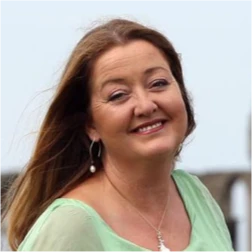
And then there is me, Lindsey Ebbs, an MSK Podiatrist with an interest in blister prevention and treatment who loves volunteering at events where using my skillset can make a difference to those competitors trying to get over the finish line, a professional cheerleader, if you like! @lindseyebbspodiatry and @blisterhelp on FB and insta
Thank you to the Uk medical team for use of their photographs in this post.
If you enjoyed this blog post, you might also like: How to Prevent Blisters When Running in The Desert.
About The Author
I’m Lindsey Ebbs, a podiatrist with more than three decades of clinical experience and a passion for working in the world’s toughest endurance events.