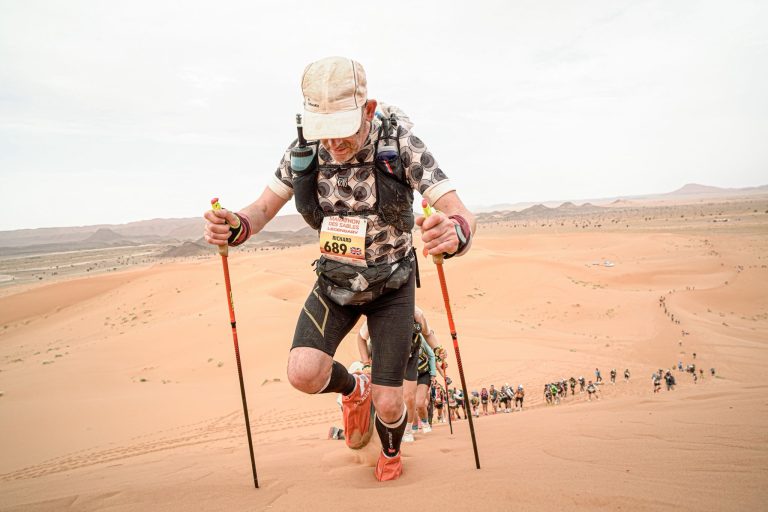
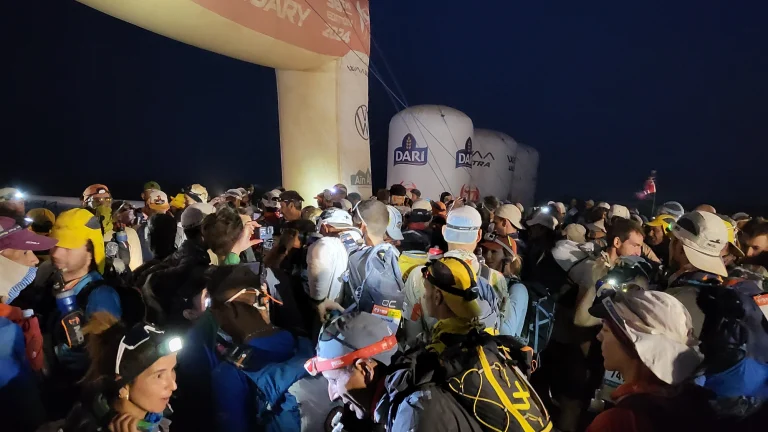
Being a Podiatrist in the medical team, at the Legendary Marathon des Sables in the Sahara desert in April 2024, gave me a very unique insight into why runners in the desert struggle with blisters.
This ultra-run is considered one of the hardest foot race events in the world, and I can honestly say, having seen it first hand , that it is absolutely true.
Most participants were very well prepared, but foot and backpack blisters (78% of all admissions in the medical tent) were a constant issue. Due to my interest in preventing and treating blisters, I realized that so many could have been avoided.
Hence, the content and intention of this blog are to help future desert runners be more prepared and reduce the large percentage of blisters arriving in the medical tent.

Blisters are multifactorial in cause and are the product of a combination of friction, pressure, moisture, lack of conditioning, bone movement, and, indirectly, heat (which creates sweat), increasing the moisture next to the skin.
Recognising a hot spot on the skin early on will help prevent the blister from progressing to a larger bubble blister. If this happens to you, then stop and dress this area with an island dressing; this will prevent the blister from progressing into a bubble blister

However, once a bubble blister has already developed, the blister needs to be drained and dressed for the runner to complete another day. To say that these blisters are painful would be an understatement, and it doesn’t matter where they are. The most problematic ones were underneath the balls of the foot; keeping the skin intact was crucial so the participants could complete the next day.
My role as a medic was to try to fix these presenting blisters and advise the participants to prevent them from worsening. Getting a blister on the first day makes the following running stages even more difficult than they already are.
Preparation and having your medical blister kit means you can self-treat and look after your feet. It is better than being too dependent on the medical tent and the materials provided, as it can get very busy sometimes.

There are sections of the medical tent designated for self-care (materials available to the participants to use, assisted blister care ( 1 medic assisting 4-6 patients at the same time), and complex blister care (on-to-one medic care).

Hopefully, from this blog, you will be able to take away helpful tips, advice, and products that you can either use beforehand or take with you; the chances are high that you will be susceptible to blisters, as this event has more challenging variables than your every day running at home.
How to avoid Pre-race Blisters

I know it’s hard to believe, but we saw participants with blisters at the medical tent before they started the event.
The issue was their camp sandals; most were new and had never been worn before the Race. Although the skin on the participant’s feet had been conditioned to their running shoes, it hadn’t been to their camp sandals, and then the skin had consequently blistered
Prevent this problem by pre-wearing everything you take into the desert, including your camp slippers/sandals. You will wear them more than you think, so your feet must be conditioned to that footwear and your trainers. A simple “schoolboy” error can start you off on the wrong foot……literally!
General Foot-care in the Prevention of Blisters
Footcare may seem an obvious place to start for most people, but many runners have thick, long toenails and hard skin underneath their feet and around their toes.
Unfortunately, when you start to run 252 km in the desert, those specific areas of hard skin are prone to getting blisters underneath them, which are unbelievably painful and difficult to access.

Long and thick toenails receive increased pressure from the front of the shoe, which creates blisters under the nails, and losing the nail is highly likely.
The solution to this predictable problem is self-care: keeping the nails thin and short, applying cream to both feet and improving skin quality in preparation for the event.
For more information see:

If the nails or hard skin is too much for self-care, then book an appointment with a podiatrist before the Race, who can do all that for you. I guarantee this will eliminate many problem blisters from the start.
Preventing Blisters by Conditioning the Skin

The skin is the largest organ of the body, and it’s the one that we all take for granted. Given time, it adapts to all the unexpected forces applied to it.
I appreciate that mimicking desert running in the UK is challenging. However, there are heat chambers around the country where one can train, preparing the skin and body for the rapid increase in temperature.
The desert terrain can be reproduced in the UK, as there are challenging assents and descents alongside beach running. This preparation allows the foot and skin to adapt to the different forces and circumstances of the desert.
There are also training camps held in the Canary Islands, which also help the body and skin adapt to the desert terrain and warmer temperatures
It is a head start but a worthwhile one in preventing foot blisters.
Using new products at the race!

I was so surprised that many participants, who had planned and trained their bodies for so long before this event, brought new, untried, untested products to the desert, especially one known to be one of the hardest events to complete.
My advice is always to try and test everything before you arrive in the desert, including blister prevention products, clothes, backpacks, socks, and shoes. Don’t pack them and hope for the best.
Throwing in the kitchen sink, rarely solves the problem, and what works for one doesn’t always work for another.
What Footwear Prevents Blisters?

Footwear is a massive subject that most competitors talk about, and this is where most of the blister problems arriving in the medical tent come from. I could hardly believe what I was seeing and the solutions were often very simple.
The biggest cause of foot blisters was incorrect shoe sizing. The blisters were located on the ends of the toes, the tops of the toes, in between the toes, under the nails, on the sides of the big toe and little toes, and on the backs of the heels.
That is a lot of blister locations from one problem……. ill-fitting shoes.
Shoe envy is the biggest problem here; most runners like to look at other runners and adopt what they’re wearing, especially if they are faster. The clear lesson here is that everyone is unique to themselves; your feet, skin, and how you run are bespoke to you. Purchasing running shoes should always be something that works for you and has worked for you for a long time. If you are not getting injured and running well without problems, why change what works?
Looking for shiny new things doesn’t always serve you, especially before a major race.
I noticed a few footwear brands that everybody favoured, but most were still causing blisters. In all those cases, their feet were too big for the shoes. Therefore, friction and pressure while running will come from the footwear, creating blisters.
I cannot tell you how many conversations I had daily about footwear shape and size; it was by far the most common subject I had with the competitors.
The “rule of thumb” is a simple technique that can be applied to all types of footwear. A thumb width allowance is all you need, where you can feel the end of the longest toe( as it may not be the big toe) to where the shoe finishes.

The shoe size is irrelevant; I always tell all patients in the clinic to ignore the size numbers in the shoe and go with what fits. Footwear is being made worldwide, and continuity and consistency have been lost. Relying on the “rule of thumb” method for length fit is more reliable than shoe size numbers. It may not be the big toe that is the longest; it could be the second or third toe.
This thumb-width room at the end of the shoe prevents the toes from hitting the front of the shoes when going downhill, preventing blisters at the end of the toe, top of the toe, and toenail.
The width of the footwear is also incredibly important. If the shoes are too small in the toe box area, they will push the toes together, causing pinch blisters, in-between toe blisters underneath the toe blisters, side of the toes, and both edges of the foot.
You can tell when a foot is too wide as the shoe fabric bulges around where the little and big toes are situated. You can also feel with your fingers if the fabric is tight and taught when stretching over those sites.
The depth of the shoe’s toe box is also important, especially if you suffer from clawed/retracted/hammer toes. Look at the shoe from the side view to see how deep it is, and assess the material to determine whether it is soft and forgiving or hard, which could then create increased pressure. Seams in the fabric can also cause increased pressure on the toes; avoid them over the toe area.
Quite a lot of the participant’s feet, in the first couple of stages, started to swell, meaning more fluid will be present in the foot itself, and from a sizing point of view, the foot will be a more generous size and width, and this should be a consideration when buying shoes.
As you can see from the photo below, this runner ended up cutting the front of his shoes off to accommodate his toes. I am pleased to say, he did finish the race.

When footwear shopping before this event, ensure you go at the end of the day or the end of a long run; that way, the foot will be the biggest it can be during the day. Otherwise, trying out shoes first thing in the morning when your feet are not warm and swollen is not an accurate representation of how you will be at the end of the day in the desert.
Laces and lace locking in preventing blisters

I was surprised to learn that many runners participating in the MdS didn’t know how to “lace lock” and had never considered the lacing system on their footwear.
The lack of lace locking with these participants caused many blisters at the ends of the toes, balls of the feet, and back of the heels.
Why should it play such an important role in preventing blisters?
Well, locking your laces at the ankle mortice joint means the foot is retained within the shoe, preventing it from moving forward; this ensures less movement of the foot (bones and soft tissues), reducing friction and pressure against the skin, which are all major contributors to blisters.
There are three different ways to lace lock, and all three are shown in this video. Most sport-related footwear has a double eyelet at the top of the lacing system at your ankle.
By the addition of lace locking, the lacing system further down the shoe can then be rethreaded and loosened, so when the foot swells up in the heat (which it will), the shoe can be slackened off without the issue of foot movement within the shoe.
Gaiters and the Prevention of Blisters

These are essential pieces of equipment for desert running/walking, as the presence of sand next to the skin of the feet will cause blisters, creating open wounds. Sand is very abrasive and unforgiving for the skin.
Most participants used Velcro to attach the gaiters to their shoes; sadly, we saw many malfunctioning gaiters in the desert.
Unfortunately, with the gaiters that were glued onto the shoe, the extreme desert heat melted the glue and they lost the adhesion to the shoe. Most ended up half attached and half off. Despite trying to tape them back to the shoe, a complete resolution couldn’t be found, as sand would inevitably find its way into the shoe, blistering and rubbing the skin—a bit like sandpaper!
The gaiters that had the Velcro sewn onto the shoe fabric fared much better than the glued version of the Velcro. Sadly, there was a trade-off with sewing Velcro directly onto the shoe fabric as it tightened the material on the top, reducing its natural stretch. The outcome of having a tighter material like Velcro attached to the shoe meant it restricted the natural stretch of the shoe fabric, almost replicating another seam around the shoe from the toe box area to around the heel. Velcro material gives less than the original stretchy material; essentially, the shoes end up smaller in width than when they were first purchased.
This needs to be considered when buying trainers. Otherwise, the smaller shoe can cause blisters in the toe area of the foot because its width has been reduced.
Although this seems like a small factor that can almost be over-looked, once runners are in the desert conditions and the feet swell, these small factors become a huge issue with blisters around the toe area of the foot
Kevin Bradley who is on Facebook under “Alex Shoe repairs”, he sews the Velcro onto the shoes, and his work certainly stood the test of the event.

Some companies like raidlight have trail shoes and gaiters that are already fit for purpose link to the desert shoe. The gaiter is attached higher up around the lacing system, which already negates the issue with the Velcro decreasing the size of the shoe’s fabric. With the added benefit of the Velcro not being knocked off the shoe by the foot by hitting a rock while running
These are relatively new but could very well solve the issues with gaiter malfunctions; the link is below for more information:
The Right Socks for the Prevention of Blisters

The types of socks and footwear discussed in the medical tent can greatly improve foot blister prevention.
When running in a hot climate, all socks should be made of Coolmax or Merino wool. This is due to their ability to wick moisture away from the skin. A liner sock and an outer sock are the best combinations for running in this event, provided the shoes have adequate room for two layers of socks.
I’ll discuss Injinji toe socks first, as many runners wore those. They are really good moisture-wicking socks. The Coolmax and the Merino wool material absorb the sweat and wick it away from the skin, decreasing the moisture next to it and reducing moisture-producing blisters. The toe sock design prevents blister formation in between the toes.
https://blisterhelp.co.uk/product-brands/injinji
However, there is a drawback that most runners don’t factor in: If there isn’t enough width room in the shoes, the extra material in Injinji socks will increase the width size of the toe area and cause toe blisters due to the lack of room in the shoe’s toe box. At this point, I need to redirect you back to the shoe fitting section above, as these socks can be great with the correct footwear width.
The injinji liner socks are thinner than the outer stock, and I always prefer the outer sock to have a bit more cushioning on the sole of the sock; this helps with extra shock absorption, reducing the pressure on the balls of the feet. My favourite outer sock is Darntough , less known about out of the USA but very comfortable, durable, moisture wicking, cushioning and guaranteed for life.
https://blisterhelp.co.uk/product-brands/darn-tough
My preferred liner sock is Armaskin; surprisingly, only one person participating in the MDS that I knew about wore these in the desert, and he was very kind enough to give me feedback. He had used Injinji socks on the first day and got blisters; he then went on to wear Armaskin liners, which stopped the blisters but became too tight due to his swollen feet over the first couple of days, he then wished he had sized up due to his swollen feet, but I think if he had worn them on day one, that swelling could have been avoided.
Armaskin liner socks do feel a bit feel strange at first, which, I think, puts people off using them. The material sticks to the skin, and by doing so, it reduces the friction of the shoe on the skin. The material has a bit of compression in the fabric, so sizing is critical if you are on the cusp of two sizes or have wide-fitting feet, then go up a size.
Always be aware that they need to be in contact with the skin all the time so they can’t be loose on any areas of the foot. These liner socks would have been a major prevention of foot blisters in the desert. If they were worn from day one, they would have stopped the feet from swelling, as you can see in the photograph from Mark Zirbster when he was running the Dragons Back Race in 2017 and then 2019. The difference to his completion was that he wore Armaskin socks in 2019, but like with everything else, you have to try these liner socks out before the Race. One pair will last 250-300 miles.

If you normally get blisters between the toes, try the Armaskin liner toe socks or use the standard Armaskin liner with alpaca wool woven through the toes. It is advantageous to have the Armaskin material next to the skin, and the toes are separated simultaneously, preventing blisters around the toe area and on all contact areas of the foot.


Armaskin liner socks, Darn tough outer socks, and the correct size shoes are the perfect sock /shoe combination for preventing blisters in the desert.
Compression sleeves and Blisters

You may wonder how compression sleeves can cause foot blisters. I was certainly a little surprised by this, too!
Quite a lot of the participants wore compression sleeves on their legs and arms. I have not considered them with any opinion before. There is a distinct lack of medical evidence to support the benefits of using them, but in the same breath, medical professional research has not found them to be detrimental to your health either; in fact, the placebo effect is considered to be highly beneficial to the runners.
However, there may be a pinch point for some runners. Ultra-running in the desert could be that critical point, as they may become disadvantaged because they cause fluid retention in their feet and hands after running long distances in extreme heat.
The compression effect of the sleeves after a long period of running in extreme heat restricted the body’s fluid returning back to the bloodstream, behaving almost like a mild tourniquet. The side effect of this was the increase in size of the runners’ feet and hands, which became quite voluminous. This fluid retention increased the size of the foot, which then caused pressure blisters on the feet, as the shoes were now a smaller size for the now larger foot.
This is what I noticed on the third day/stage, which was 80km in duration; like I said earlier, more medical evidence or research needs to be done, and therefore, it becomes hard to advise either way. From a “common-sense” point of view, I certainly think it is a factor to take on board: If compression sleeves are not advantageous to you, then, is there a reason for wearing them?
However, the compression sleeves should always be removed as soon as a stage has been completed, and resting with your feet up will help the lymphatic system drain the excess fluid back into the bloodstream.
Gait Mechanics and Foot Blisters

This section will surprise you the most, but peak pressure load-causing blisters are what I see the most in my MSK clinic.
The third day of the MDS event was the 80 km-long stage. The terrain had many ascents, and this was the worst day for foot and backpack blisters that we saw in the medical tent.
From a biomechanical point of view, when running uphill, the body’s positioning and centre of pressure change, increasing forefoot loading. This increase in pressure on the balls of the feet is the trigger for causing blisters over the metatarsal heads; these are agonising from the moment you start with them. For me, the thought of running for another three days after this happened would be sole destroying; I honestly don’t know how the runners managed it.

If you have struggled with blisters on the soles of your feet and have tried everything to stop them, you might have a mechanical reason for them. Visiting a podiatrist for a pressure gait analysis assessment will likely help you determine why the blisters are developing.
This bit of technology is useful and a fascinating insight into what the foot does in motion, and I use mine daily in clinic. The pressure gait analysis indicates high-pressure loads on the weight-bearing areas of the foot, which can cause blisters. These peak pressure loads can also suggest where there might be pre-stress areas on the foot, giving you the “heads up” before an injury might present and also preventing the blisters before they have a chance to develop.

The Photo with the patient’s feet on the pressure gait analysis photo presented blisters under and in-between the little toe on the right foot. This problem only happened when he ran over 10km; he had tried most over-the-counter products but still needed help. The pressure gait analysis indicated the high-pressure area on the right foot under the 5th metatarsal head when the forefoot was loading, and this was precisely the area of the foot where he struggled with blisters.
After identifying where the problem is, the next stage is working out why this is happening. A limb length discrepancy was the issue for this particular patient, combined with hip and pelvis muscle weakness. The foot had tried to compensate for this, which was the reason for the peak pressure loads on the 5th MPJ and blister formation. With an exercise strengthening program for the hips and pelvis and orthotics incorporating a heel raise, this runner is now blister-free and running faster.
Podiatrists who are interested in MSK/ Biomechanics will probably have a pressure gait analysis system in their clinic. The link is here for all those gait and motion clinics in the UK, should you want to book an appointment with them. Most runners are surprised at a podiatrist’s skillset; we are lower limb problem solvers.
Here is the link for the pressure gait clinics in the UK, but they do have clinics in other countries that are not shown in this link; contact them anyway if you reside elsewhere from the UK.
https://www.gaitandmotionclinics.co.uk
Taping the foot to prevent blisters

Quite a few of the competitors who had participated in previous years had come prepared, with prevention taping of the feet, and this method worked for quite a lot of them. The tape reduces the shear against the skin, reducing the chances of blisters, especially on the balls of the feet, which helps in those extreme distance and uphill/downhill terrain stages.
I prefer the application of two layers of tape on the balls of the feet, especially in the desert, while using a lighter tape like hypafix to secure the k tape around the sides of the foot or through the toes, being careful not to apply too much tension, allowing for fluid retention.
Taping the toes can be a bit fiddly, but with practice, it gets easier; the lighter medical tapes are better for using on the toes in terms of application and comfort, but a lot of competitors, like the heavier K tapes and Zinc oxide tape. I always prefer placing the first strip over the top of the toe from the front to the back and then wrapping the second or third tape layer around the toe. This technique prevents the likelihood of the edges of the tape irritating the neighboring toe into getting a blister.
Shown below are the tapes you can use for desert running. It becomes a personal preference, but there is science behind it, too. The material, adhesive, and stretch of the tape are important; most of the available kinesiology tapes are cotton-based, and as we already know, cotton retains moisture next to the skin (no cotton socks, please), which is a major factor in blister formation. KT Pro and Extreme are made from synthetic material and wick away skin moisture. I recommend this type of blister prevention tape as it reduces the risk of blistering. The KT blister tape is smaller in size and more suitable for toe-taping

The adhesive on the tape varies from brand to brand, and some have extra sticky adhesive, which is more suitable for desert running, as the glue needs to withstand the high temperatures and increase in sweatiness of the skin; these are important factors that affect the performance of the tape while competing
If you have had a skin reaction to the tape adhesives, especially Zinc Oxide plaster (like me), then Hapla-band tape would work for you. I use it in the clinic for taping, and it works well without the irritation of the aggressive adhesives; it also comes in various widths, but I mainly use the 5cm version.
To reduce the need for scissors, you can precut and shape the tape at home before the event.
Skin glue can be used on the skin before applying the tape, which will help the tape adhere to the skin; this comes with a warning. The skin glue, like skintac (our preference), needs a pair of gloves to apply as it is very sticky, and you don’t need sticky fingers in the desert, nor sticky foot skin either. Make sure all the skin on the foot is covered with the tape, or apply two toms blister shields on the tape and skin afterward. This product is a fantastic friction-reducing powder that is not self-limiting. Always use Tacaway wipes on the skin after removing the tape, which will remove all traces of skin glue. If left on, it can also cause blistering. All of these products are light enough to carry in your backpack.
Compound tincture of Benzion (TBCo) is an old-fashioned skin glue still used today, and many runners use TBCo for taping. It is ok to use, and I trained with it many years ago. Still, this product comes with a warning, as it is prone to causing skin reactions/allergies, as shown in the Photo of a runner in the MdS ( he had a slight reaction before the Race, which then increased the more times he used it) so use the product before the event many times to ensure there is no reaction. However, I prefer Skin Tac as the modern-day skin glue equivalent without the problem of skin reactions.

Using poron insoles to prevent blisters on the soles of the foot


Reducing the high peak pressure loads on the soles of the foot can also be prevented by using poron insoles, a fantastic long-lasting material that can shock, absorb, and redistribute the high-pressure areas on the foot. If the shoe has enough room, I suggest using the 6.4mm high-performance poron or the 3.2mm as a compromise.
If the available footwear room is at a minimum, remove existing insoles to accommodate the poron. I cannot stress enough how this simple insole can help decrease the shock absorption to the foot and prevent those painful “balls of the foot” and under-the-heel blisters.
Engo patches and preventing blisters
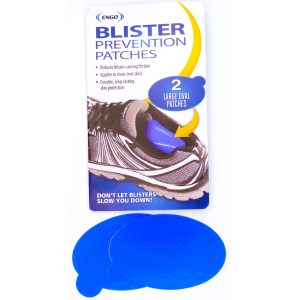
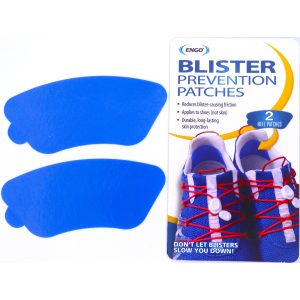
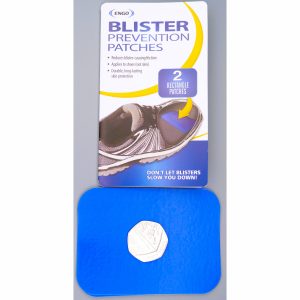
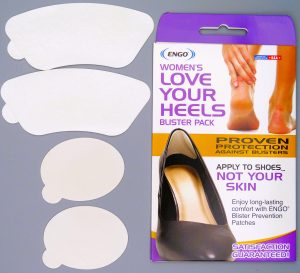


These patches may look like they wouldn’t change anything, let alone prevent blisters, but their frictionless surface will reduce the shear against the skin from footwear. They can be applied anywhere on the inside of the shoe, preventing friction on the tops and sides of the toes, balls of the feet, and heels (back, side, and under)
As a double blister preventative measure, large oval or rectangular engo patches are applied as a pressure and friction-reducing surface on the poron insoles where the balls of the feet or heels contact the insole. Both of these methods will reduce the chance of blisters on the balls of the feet.

Backpack Blisters

Although foot blisters were one of the major problems arriving in the medical tent, there were also other problems, such as blisters and open wounds due to the backpacks constantly banging onto the skin of the lower back and shoulders.
These areas were causing a huge amount of problems for the participants. They were large, painful wounds, and we had to constantly redress them every day, as sweating would add to the issue.
Apart from reducing the weight and length of these backpacks, pre-taping the areas of contact with K tape would be advisable. This will, at the very least, reduce the shear on the skin.
I cannot stress how important it is to have the right backpack. Alongside its weight, if it is too long, it causes problems with the lower back, constantly irritating the skin, and its weight increases the severity of the problem.
I know that it has been recommended to keep the weight between seven and eight kg, and now I know why anything heavier than this will cause problems.
Adding a cushioning material and engo patches to the shoulder areas in contact with the skin before the event would redistribute the pressure and friction next to the skin
Here’s my advice on what to try to prevent blisters before arriving at a desert ultra-running event.

Armaskin Socks
Armaskin sock liner would be first on the list to wear as a liner sock, either the original or with the toes in, depending on the blisters you struggle with.
Merino or cool-max socks
Outer sock material has to be Merino or cool-max to wick the sweat away from the skin.
Correct footwear
Correct footwear is a massive cause of blisters; please read the above section and choose a pair that has been worn for a while
Gaiters
Make sure the gaiters are a secure fit without glue
Taping
Take a taping material with you that you have used before, either precut or shaped, with a pair of small scissors while you are there. Use 2Toms blister shield powder over the tape to further reduce the friction of the tape.
Poron
Replace your insoles with high-performance poron, to increase shock absorption and reduce the peak pressure loads under the foot.
Island dressings
Island dressings of various shapes and sizes, with extra tape to secure the skin, are undervalued but essential for all stages of blisters, especially hotspots.
Hydrocolloid dressings
Please don’t use hydrocolloid dressings (e.g., compeed) as they tend to melt into the wound due to the high temperatures in the desert.
Engo patches
Take a selection of engo patches as you never know which area of the shoe may create pressure and friction to the skin (they are super light in your backpack).
Conditioning training
Train in challenging terrains to prepare the skin for the forces that will be put upon it.
My fellow UK medical team who did a fantastic job treating the participants of the MDS.

Jason
Dr Jason Louis, a consultant in the emergency department, kept everyone calm in any situation. His kindness and infinite experience as a medic and a competitor in the 2023 MDS made him a “go-to “person in the medical tent. I certainly felt reassured when I was working with him, as nothing was too much trouble. ( Instagram @doctorjase )

Katie
Dr Katie Tabner is an out-of-hours GP with experience as a Doctor at the UTMB and other expeditions.. She may have been the smallest in height, but she made up for it with her boundless energy and laughter, which kept us all amused, including the runners. She is a pocket rocket that made our desert experience medically and personally very enjoyable. ( Instagram @katietabner)

Lydia
Dr. Lydia Osbourne is an anaesthetist who travels the world and volunteers as a Doctor on remote expeditions. Not only is she brilliant as an expedition Doctor, but she could also be a travel adviser, as there are few places she has yet to explore. We all love watching her social media account; we feel we are travelling with her. From now on, I will always ask her advice before booking a holiday ( Instagram @medic-explores)

Amy
Amy Perkins is an emergency department Nurse. This lady can turn her hand to anything. She became a great foot care provider in the medical tent and was such a quick learner. Everyone needs Amy on their team; she is literally a female MacGyver!
(Instagram @ajperky)

Anne-Marie
Anne-Marie Brodrick, an MSK Podiatrist and a registered tropical disease nurse ,she has a great skill set with experience, making the perfect combination for any expedition, with the added benefit of speaking fluent French. Her Irish storytelling and wicked sense of humour were a much-needed commodity for all volunteers and participants (facebook @brodrickspodiatry)

Jake
Jake Heath is an MSK Podiatrist. He is involved in elite sports, having rowed the Atlantic in 2016. In his spare time, he avidly supports promoting podiatry to younger generations and is a director of the Royal College of Podiatry.
He has the cutest dog ever!
( Instagram @jakeheath-elitepod)

Georgina
Dr Georgina Beech is an emergency medicine specialist in Sydney Australia, a Doctor at ultramarathons in Australia and she has just finished a stint as a medic on a scientific expedition in Honduras. In her spare time, she runs ultramarathons and is now getting into mountaineering, modestly speaking, she thinks she isn’t very interesting; however, I don’t know how she fits it all in!!

Lindsey
And then there is me, Lindsey Ebbs, an MSK Podiatrist with an interest in blister prevention and treatment who loves volunteering at events where using my skillset can make a difference to those competitors trying to get over the finish line, a professional cheerleader, if you like! @lindseyebbspodiatry and @blisterhelp on FB and insta
Thank you to the Uk medical team for use of their photographs in this post.
If you enjoyed this blog post, you might also like: A Podiatrist in the Sahara Desert…… fixing feet
About The Author
I’m Lindsey Ebbs, a podiatrist with more than three decades of clinical experience and a passion for working in the world’s toughest endurance events.