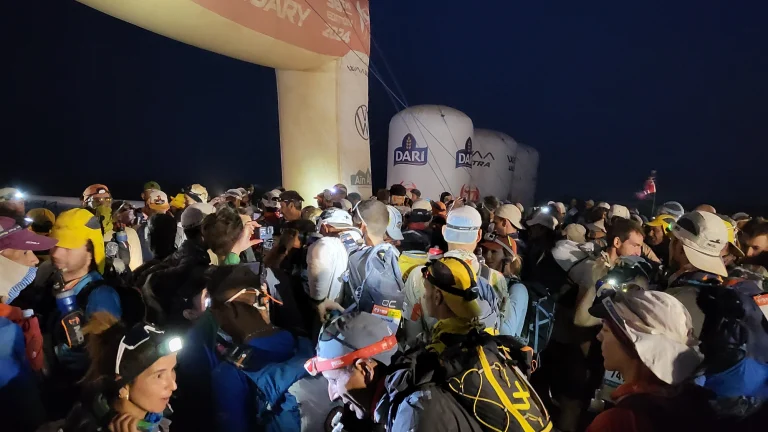
The SheUltra™ is a 50 km all-female ultra event held on the Llŷn Peninsula in North Wales. It welcomes women of different abilities and experience levels, including runners, hikers and walkers, and is built around the principle of “no cut-offs”. The event combines a fully marked multi-terrain route with a wider focus on community, women’s wellbeing and support for women’s cancer charities.
I worked as the principal podiatrist on the medical team at SheUltra in April 2026. Throughout the day, I saw many of the same problems that occur at almost every ultra: foot swelling, shoes becoming too tight, blisters, wet socks, knee pain, chafing and the effect of rapidly changing weather.
This article explains the most common foot and skin problems I encountered, why they happen, and what you can do before and during an ultra to reduce the risk.
About me

I am Lindsey Ebbs, a UK podiatrist specialising in blister prevention, foot care and lower-limb issues in endurance and ultra events.
Through Blisterhelp, I help runners understand why blisters and foot problems develop, how to recognise early warning signs and what practical steps can prevent a minor issue becoming race-limiting. I have worked at ultra events in the UK and internationally, including the Marathon des Sables Legendary in the Sahara Desert, Fire & Ice Ultra Marathon in Iceland, and SheUltra in North Wales.
My aim is not simply to treat damage once it has happened. It is to help runners prepare their feet, footwear, socks and self-care kit properly before they reach the start line.
You can read my personal account of working as a podiatrist at the SheUltra Cymru, including my experience with the medical team and what happened throughout the event on the Expedition Podiatrist Blog:
Foot swelling: why your shoes become smaller

Foot swelling is common in ultras. During prolonged exercise, especially over hills, rough ground and many hours on your feet, fluid can collect in the feet and hands. Your foot does not become longer anatomically, but it can become wider, deeper and more voluminous inside the shoe.
This is why simply buying a longer shoe is not always the answer.
A shoe should have approximately a thumb’s width between the end of your longest toe and the front of the shoe. Your longest toe may be your big toe, second toe or third toe. Ignore the size printed on the shoe and focus on the actual space available for your foot.
However, swelling is mainly a width and volume problem, rather than a length problem.
If your shoe is tight across the forefoot, narrow through the toe box or taut over the top of your toes before the race, it will become more restrictive when your feet swell. This is when runners develop blisters around the big toe, little toe, edges of the forefoot and between the toes.
What to do
- Check there is a thumb’s width in front of your longest toe.
- Make sure the shoe is wide enough across the big-toe and little-toe joints.
- Choose a toe box that does not taper sharply over the toes.
- Avoid uppers that are tight over the top of the foot.
- Test your complete system: shoe, socks, insoles, gaiters and any toe protection.
- Do not assume a bigger shoe size automatically means a wider shoe.
For a more detailed guide, read:
Footwear: the full system matters


The footwear principles I use for desert ultras also apply to a UK ultra such as SheUltra™. You need enough length, width, toe-box space and upper-fabric flexibility to cope with distance, swelling, hills and wet conditions.
The difference in the UK is that the weather can change dramatically. At the SheUltra™ Cymru, runners experienced cool conditions, rain, hail and wind. Your footwear and sock choices need to cope with getting wet, changing temperature and longer periods spent walking or running on mixed terrain.
A shoe with a roomy toe box is especially important if you wear liner socks, toe socks, dressings or protection between the toes. All of these add bulk.
I often find Topo and Altra footwear useful for runners who need more toe-box room. However, every runner still needs to test their own shoes thoroughly with the socks, gaiters and insoles they intend to use on race day.
Lace locking: stop your foot moving inside the shoe
Laces often loosen during an ultra. When the foot moves more inside the shoe, friction increases. This can lead to blisters at the ends of the toes, under the nails, around the heel and under the forefoot.
Lace locking is one of the simplest ways to improve footwear security. It helps hold the heel and midfoot in position without crushing the toes.
I do not recommend elastic “lazy laces” for an ultra because you lose the ability to adjust the shoe properly as your foot changes. You need to be able to loosen or tighten different areas of the shoe when swelling, pressure or terrain changes.
Socks: fit, fabric and dry replacements

Socks are one of the most important parts of blister prevention.
A sock that is too tight can compress the toes together and increase pressure. A sock that is too loose can bunch, wrinkle and create friction. The fabric should be moisture-wicking so sweat and water do not sit next to the skin.
Coolmax and Merino wool are both my preferred materials. Some runners benefit from a liner sock under a moisture-wicking outer sock because friction then occurs between the two sock layers, rather than directly between the sock and the skin.
Armaskin liner socks may help some runners with moisture management and mild compression, but they need to be fitted and tested carefully. If they are too tight, or there is not enough room in the shoe, they can create new pressure problems.
Toe socks can be useful for runners who repeatedly blister between their toes, but they add extra material around the toes. They only work if your shoes have enough toe-box room.
Always carry a spare pair of socks in your pack. If your socks become wet, change them as soon as it is practical to do so.
Gaiters: useful beyond desert running

Gaiters are often thought of as desert equipment, but they can be useful in UK ultras too.
SheUltra™ Cymru includes sandy beach sections, mud, undergrowth and debris. Sand or grit inside the shoe can act like sandpaper against the skin and quickly cause blisters.
Gaiters can help prevent debris entering the shoe. I like Dirty Girl Gaiters because they are lightweight, functional and available in fun designs. Whichever brand you choose, test them with your race shoes well before the event.
Hot spots and blisters: act early


A blister is a separation within the skin layers that fills with fluid. It is not caused by one thing alone. Blisters are multifactorial and can involve friction, pressure, moisture, repetitive bone movement, swelling, skin condition and lack of conditioning.
A hot spot is the early warning stage. It is usually a reddened area that feels warm, sore or irritated. This is the time to act.
If you ignore a hot spot, it will develop into a fluid-filled blister. The blister can then burst, lose its roof and become a more painful open wound. Under a nail, pressure can build and the nail may eventually lift from the nail bed.
What to carry
For most runners, I recommend carrying:
- Small island dressings for hot spots.
- Hypafix, Fixomull or Mefix tape to secure dressings.
- 2Toms Blister Shield powder application to reduce friction over a dressing.
- A sterile medical hydrocolloid dressing for an open blister where the roof has already come off.( not compeed)
- A spare pair of dry socks.
- Small scissors, if permitted and safely carried.
Island dressings are one of my preferred options for treating hot spots. They can reduce friction and prevent the problem getting worse, especially when secured properly with tape.
Hydrocolloid dressings are not my recommended option for preventing blisters on intact skin. They can create problems if used too early, particularly on a sweaty foot. They are more appropriate for a blister that has already lost its roof, provided the dressing is sterile and can be secured safely.
Knee pain: deal with it before the race

I saw a lot of knee pain at SheUltra. Much of it was pre-existing and simply became worse after long-distance running or walking over variable terrain.
If you already have knee pain before an ultra, do not assume it will settle after 50 km. You need to understand the cause, have it assessed if necessary and test your management plan during training.
Kinesiology tape may help some runners feel more supported, particularly around the kneecap. The research is mixed, but if it feels comfortable, has been tested in training and does not restrict movement, it can be one useful part of a wider plan.
Do not rely on tape alone to solve an unresolved injury.
Chafing: talk about it before it becomes a problem

Chafing can be difficult to discuss, but it is very common in ultras.
I saw and heard about chafing under the breasts, around the upper arms, on the inner thighs and around the labia. Sweat, wet clothing, repetitive movement and poorly fitting underwear can all contribute.
Do not wait until chafing is painful before addressing it. Test your clothing, underwear and anti-chafing products in training.
Hand swelling and jewellery


Hand swelling can occur for many of the same reasons as foot swelling. During prolonged exercise, fluid can collect in the hands and fingers.
Remove rings before the race. If fingers swell around a ring, it can become tight enough to affect circulation and may need to be cut off.
The same principle applies to toe rings and tight jewellery around the feet and ankles.
Hypothermia: a major lesson from the SheUltra™ Cymru


The weather at SheUltra changed rapidly. There were periods of sunshine, cold, rain, hail and wind. Runners who were wet, tired, under-fuelled and still out on the course for many hours were particularly vulnerable to hypothermia.
Hypothermia does not only happen in winter mountains. It can happen in any endurance event when the weather turns, the body is exhausted and the runner cannot retain heat.
How to reduce the risk
- Carry a waterproof jacket that you have tested.
- Carry a warm layer in your pack.
- Change out of wet clothing as soon as you can.
- Fuel regularly, especially later in the event.
- Do not wait until you are shivering uncontrollably before adding layers.
- Tell the medical team if you feel confused, unusually tired, clumsy, very cold or unable to warm up.
Exercise-induced vasculitis: sometimes called Disney rash

I also saw a presentation that can look alarming: exercise-induced vasculitis, sometimes called “Disney rash”.
It often appears as red or purple blotches on the lower legs, sometimes with ankle or foot swelling. It can itch, sting or burn. It is usually harmless and settles on its own, although symptoms may last several days.
Cooling the area, elevating the legs and avoiding further prolonged standing can help. If the rash is painful, rapidly spreading, associated with systemic symptoms or you are unsure what it is, seek medical assessment.
Final lessons from the SheUltra™ Cymru
The SheUltra™ Cymru reinforced many of the lessons I see at every ultra event:
- Footwear fit matters more than the size on the shoe box.
- Foot swelling is mainly a width and volume problem.
- Socks need to fit properly and manage moisture.
- Blisters are easier to prevent at the hot-spot stage than to treat later.
- Gaiters can be useful in sand, mud and debris.
- Do not start an ultra with unresolved knee pain.
- Chafing is common, manageable and nothing to be embarrassed about.
- Wet, tired and under-fuelled runners are at risk of hypothermia.
- Preparation is not just mileage; it is footwear, socks, clothing, nutrition, self-care and learning how your body responds over time.
The best time to solve an ultra-running problem is before the start line. Test your equipment, learn your personal risk areas and carry the supplies you know you will need.

About The Author
I’m Lindsey Ebbs, a podiatrist with more than three decades of clinical experience and a passion for working in the world’s toughest endurance events.