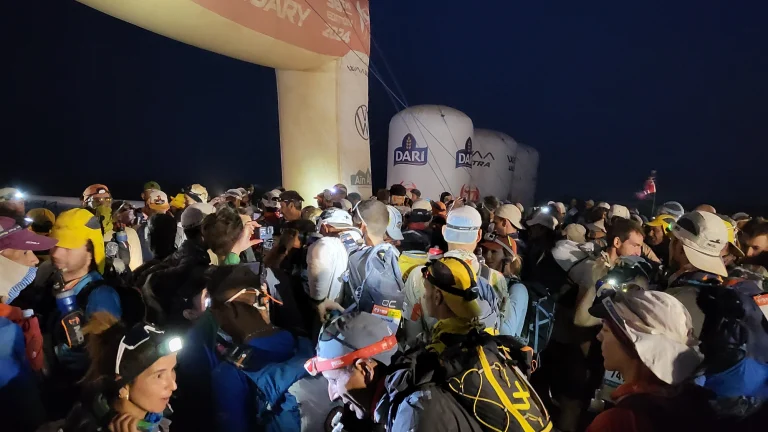
Having been a podiatrist on the medical team, volunteering at the Marathon des Sables Legendary (MDS) in April 2024. I couldn’t help but notice the variety of head and neck clothing the runners wore to keep cooler in the Sahara Desert.
The MDS legendary offers iced water at checkpoints throughout each stage of the race. The checkpoints have a medical tent and medics, rest tents, toilets, drinking water, and refreshing iced water for the head and neck. I cannot emphasize enough how welcome this iced water is for the runners. The on-site medics gently pour the iced water on the head and necks of the participants.
You might wonder why the medics have this role. The time spent pouring the water over the runners’ necks and heads gives the medics enough time to assess the participant’s physical and mental well-being. This must have been really irritating for the runners at that time, as they were super focused on finishing. The “chit-chat” about random stuff with the medics must have seemed a total waste of their energy; needless to say, I did talk for England!
I was at the checkpoints twice during the six-day race stages, and it was enough time to work out which neck scarves were the most efficient in retaining the coolness of the iced water for a longer period of time.

There is medical evidence from studies for cooling the neck area in hot climates in outdoor activities and reducing the body’s core temperature for longer. Mainly due to the proximity of the thermo-regulation centre at the base of the brain. (this area of the brain receives the signals regarding the body’s thermal state). Links are below:
https://pmc.ncbi.nlm.nih.gov/articles/PMC3017491
https://pmc.ncbi.nlm.nih.gov/articles/PMC8800980
For those of you who are into baking, this will resonate with cooling the inside of the wrists under cold water, which keeps the hands cooler when making pastries and patisseries.
When the sun is at its hottest, 10 km in the Sahara Desert will feel like an eternity. It can heat up to 50° C + at times. Keeping the body’s core temperature down for longer is vital to finishing the race.
When I was selected for head and neck refreshing duties, I couldn’t help but notice the variety of head and neck clothing the runners had brought with them. Buffs, hats with neck cloth attached, wide-brimmed hats, or simple baseball types varied significantly in design and material.
The Frogg toggs® cooling chilly sports towels, was the one scarf that stayed cooler for longer, and brought a significant relief to the runners in the scorching desert heat. It quickly soaked up the iced water and kept it cooler longer than any other products I saw the runners wearing, providing a much-needed reduction in body temperature.

When I got home to the UK, I decided to purchase one and see for myself how this product actually works.
Although I’m a podiatrist, and technically, this is out of my scope of practice, I am naturally curious and a problem solver in my clinic.(I come from an engineering family; my children are too, we all have enquiring minds)
I couldn’t believe how cool the product felt to the touch when I opened it for the first time before dipping or immersing it in cold water. I took the scarf to the MDS expo when I was speaking in London, and shared it with future MDS runners, as you have to feel it to be convinced that it feels cool even before being soaked in cold water.
The scarf is made from a 100% hyper-evaporative polyvinyl alcohol material, which retains water whilst remaining dry to the touch. (I am assuming it is the alcohol element in the material that makes it cool, but don’t quote me on that as I am not a chemist)
Soaking in chilled water allows the material to cool below the ambient temperature of the desert. With its ability to cool the neck , and reduce the core body temperature for longer, I realised this has to be one of the most essential items to take into the desert.

Having spent time in the MDS, I soon realised that small changes, collectively, make such a difference to a successful outcome. Therefore, I decided to share my thoughts on this product.
I have no affiliation or relationship with the company that makes this product. However, I have no hesitation in recommending it, as it works.
I’m a great believer in recycling products, so when you are sick of the sight of this scarf, which I’m sure you will be after eight days in the desert, it works really well in polishing cars—as good as chamois leather would anyway!
For those of you who would like the specifics for the one I purchased, details are below
It is 33” (83.5 cm) x 7” (17.5 cm) weight 45 grams without the case. – I would suggest keeping it in a Ziplock bag to keep it from drying out.
Available in the USA from their website below:
https://www.froggtoggs.com/Chilly-Pad-PRO-Microfiber-Cooling-Towel
Amazon in the UK:
https://amzn.eu/d/00nPgdV
About The Author
I’m Lindsey Ebbs, a podiatrist with more than three decades of clinical experience and a passion for working in the world’s toughest endurance events.