& why it’s the biggest single cause of foot blisters.
About me
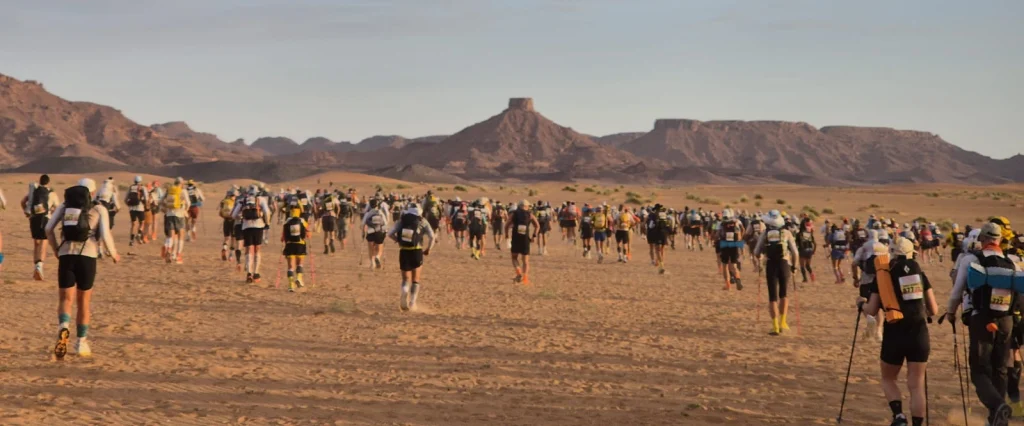
I am an expedition podiatrist specialising blister prevention and treatment. I have served on medical teams at the Marathon des Sables (MDS legendary) Fire and Ice Ultra in Iceland, London Marathon and the Great North run. I’m used to diagnosing complex cases of overuse injuries and also treating infections, sprains, pressure sores, chafing and a wide range of blister problems, commonly seen at these events.
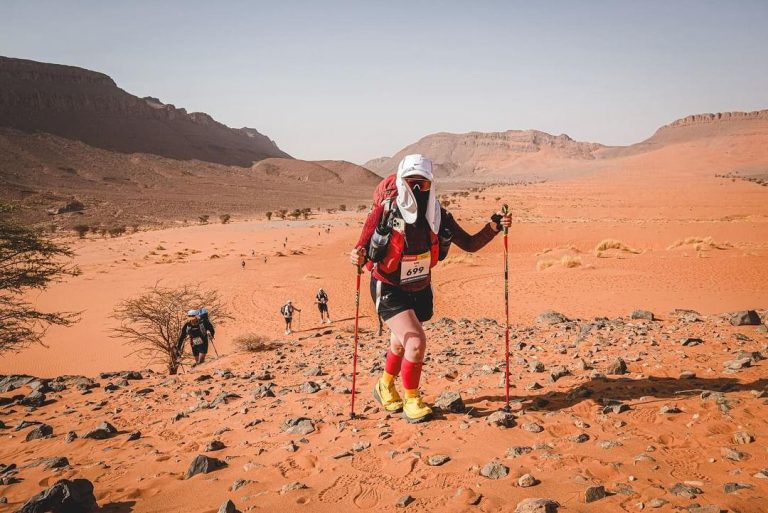
Why does foot swelling happen at Desert ultras
- Extreme heat triggers vasodilation: Blood vessels widen, dramatically increasing blood flow to the skin in the hope it will shed heat. This also raises capillary pressure, forcing more plasma fluid out into the tissues of the feet and lower legs.
- Hydration is complex: Desert runners naturally increase their fluid intake, but sweating can be extreme, and salts and electrolytes are rapidly lost. Over-hydration (esp. with plain water) or failure to replace sodium can cause additional fluid to collect in tissues via dilutional hyponatremia. (low sodium levels in the body)
- Multi-day stress: Cumulative daily strain, long periods on foot, repetitive microtrauma from sand and uneven terrain, and near-constant upright posture continually stress the lymphatic and venous return systems, quickly overwhelming their ability to clear fluid from tissues.
- Gravity + vasodilation: Standing or running for long periods in a hot desert means gravity pulls fluid down, while the widened vessels allow much more of it to leak into the feet.
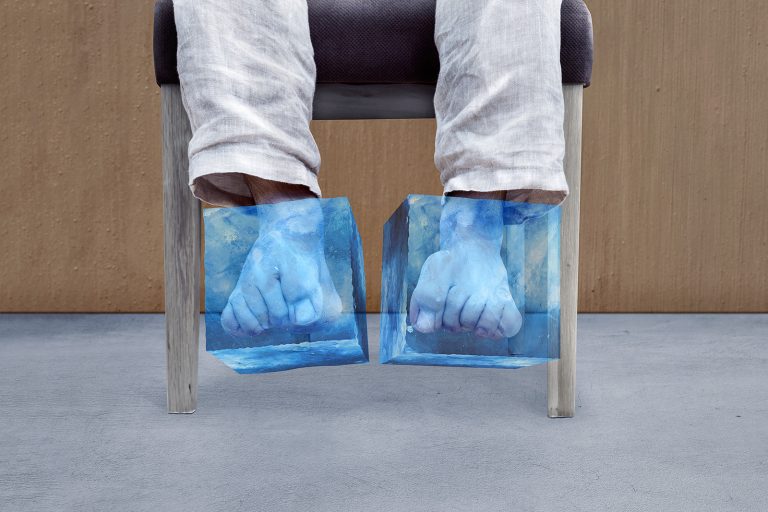
- Sand and gear amplify friction/pressure: Swollen feet press harder against the inside of shoes and socks, which often trap heat and sand, raising blister risk. Essentially you have a bigger foot in a smaller shoe. Blisters are especially common in- between the toes, around the edges of the heels, foot and toes where the shoe is creating pressure against the foot.

What Increases Your Risk
- Prior history of leg/foot swelling or injury; older age.
- History of heart, kidney, liver, or lymphatic disease—even subclinical dysfunction can be unmasked in desert environments.
- Less acclimatisation to heat or altitude; individuals with lower fitness, higher BMI, or low baseline mobility.
- Use of certain medications (NSAIDs, steroids, calcium-channel blockers—all can worsen fluid retention).
- Female sex- pregnancy, and hormonal changes, including the menopause, may raise rates of fluid retention.
Early Warning Signs
- Tightness or “bursting” sensation in shoes or socks as the day goes on.
- Puffy, shiny skin over the toes, arches, or ankles; pits easily when pressed.
- Swelling that worsens overnight or doesn’t fully resolve by morning.
- Increase in foot width size—sometimes requiring loosening laces or changing shoes mid-race.
Prevention & Management in Desert Ultras
Before the Event
- Train with progressive exposure to heat and prolonged time on feet to adapt vascular and lymphatic response. There are various heat chambers available in the UK for training. Loughborough university being one of them. Heat Training | Sport | Loughborough University
- Training in a warmer country to acclimatise to the heat beforehand. If none of the above are available to you – then run on a treadmill at home with the heating thermostat up to desert temperatures, you may want to be home alone whilst doing this!
- Choose shoes with a thumb’s width room at the end of the toes to the toebox of the shoes. Make sure the shoes are wider than your usual width in trainers to accommodate the swelling of the feet. Pre-test all kit in heat and with swollen feet.
- Practice electrolyte-balanced hydration—include salts, not just water.
- Excretion sodium testing available at.
- www.precisionhydration.com this way you will know exactly whether you are a salty sweater or not and will be advised on exactly what your salt requirements will be.
- Armaskin liner socks – these are very unique items that need to be sized correctly and trained for months ahead in, but they work really well in the desert environment. They stick to the skin with compression and prevent the fluid from accumulating in the feet. They have an anti-friction surface that also prevent blisters and allows the sweat on the feet to move into the outer sock, keeping the skin on the feet dry. I have written about these already in the blog below Armaskin Anti-Blister Liner Socks – Blisterhelp
- Frogstoggs scarves – The thermoregulator for the body temperature is located at the base of the head/neck and it is precisely this location that needs to be kept cool whilst running in the heat. At the checkpoints of the Marathon des Sables there is iced water refreshing of the head and neck, and the most effective scarf for keeping cooler is the Frogstoggs one, I have written about this item The best neck scarf for keeping cool when running in the desert – Blisterhelp
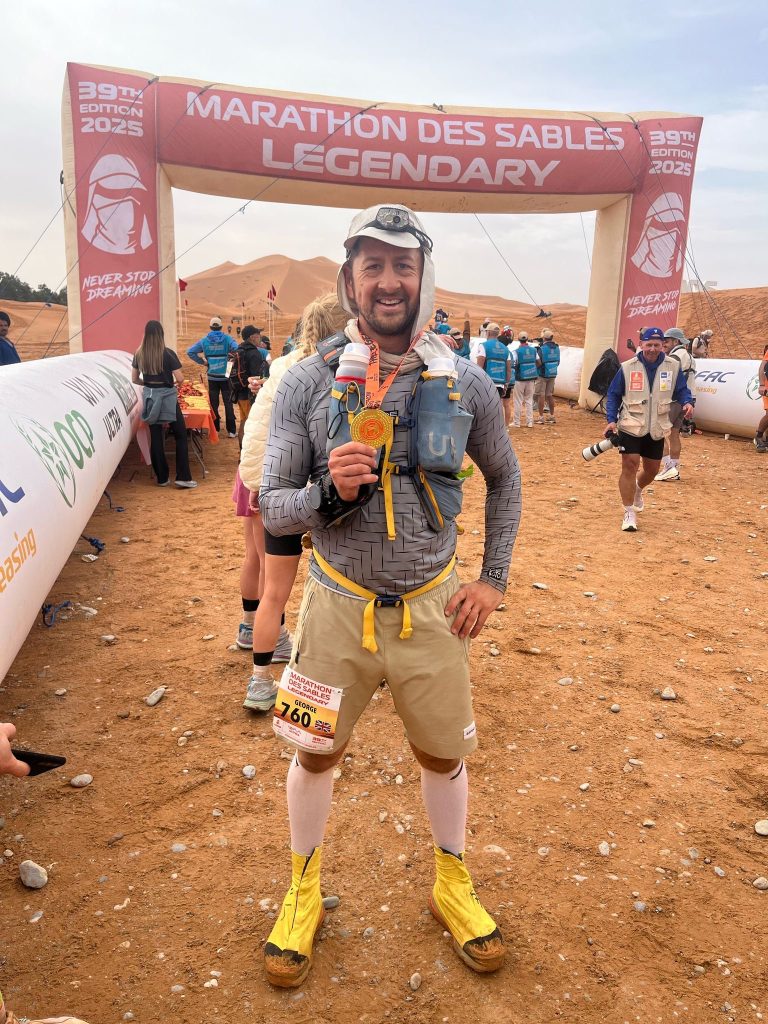
- Desoto tops for keeping cool- I was advised by one of the 2024 runners that the lighter colour keeps you cooler than the darker shade, as he wore both. (Credit to @averagegeOrge on Insta). These work like the Frogstoggs scarf in that it helps regulate the bodies temperature whilst running in such extreme heat. Quite a few of the MDS 2024 runners wore these with great outcomes. Information below; https://www.desotosport.com/products/mens-skin-cooler-long-sleeve-ultra-top?_pos=2&_sid=c3d2ffa70&_ss=r
All of the above make a difference in reducing the fluid retention in the foot and leg, understanding that small changes when put together make a much bigger impact, enabling a very successful completion of desert ultrarunning race
During the Race
- Change socks regularly; use moisture-wicking, double-layer options.
- Remove shoes and elevate feet (on a backpack, in the checkpoint tent) at every opportunity, even 10 mins will make a difference.
- Apply anti-chafing products, tape or island dressings where shoes/socks may press. Use camp footwear that doesn’t constrict swollen feet.
- Monitor urine colour and volume—a rough check on hydration, aiming for pale straw colour.
After Each Stage
- Raise your legs above heart level to help with lymphatic and venous return and rest as much as you can
- Cold water (if available) or damp towels may ease inflammation and swelling.
- Gentle self-massage can encourage lymph flow.
- If swelling is severe, persistent, or accompanied by pain, redness, or skin breakdown, seek medical review immediately—especially with a personal/family history of thrombosis or vascular disease.
Takeaway for Desert Ultrarunners
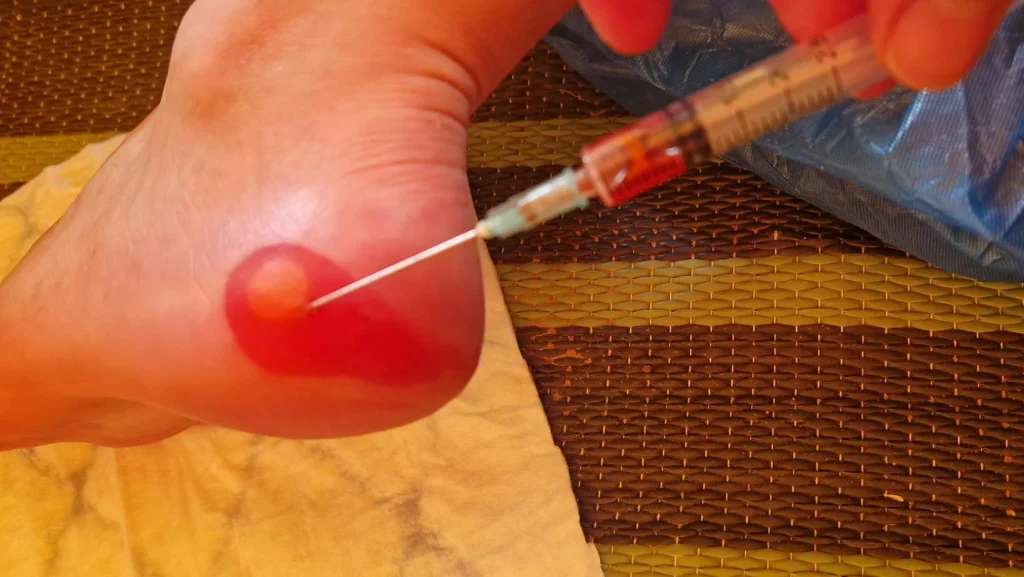
Foot swelling is expected in multi-day, hot, high-mileage events—but can be drastically limited with smart preparation. Recognising that foot blisters caused by foot and leg swelling, is part of much bigger picture of how your body is coping with the extreme heat. You are not just a foot or leg; they are merely reflecting your general health as a whole!
- Acclimatise early, months before the race
- Size up all footwear width and ensure there is always a thumbs width between the end of the longest toe and the front of the shoe
- Balance fluids and electrolytes.
- Wear the cooling products for the neck and the upper body
- Look at Armaskin liner socks and the benefits they can offer
- Practice proactive, persistent skin and foot care. By keeping nails short before the race, engage a podiatrist to remove all excess callous and corns and apply emollient cream to both feet for 6 weeks before the race
Blisters are often the end-result of unaddressed swelling; prevention starts from the very first day of training.
Blisterhelp Marathon Des Sables Pilot Studies
About The Author
I’m Lindsey Ebbs, a podiatrist with more than three decades of clinical experience and a passion for working in the world’s toughest endurance events.